Kratos Receives $33.6 Million Contract to Provide Power Conversion System for NASA’s Historic SR-1 Freedom Nuclear-Powered Spacecraft

Space Reactor-1 Freedom will be the first spacecraft ever to demonstrate fission power beyond
Earth’s orbit, traveling to Mars to deliver a sciece payload called SkyFall.
Photo Credit: NASA/
A photo accompanying this announcement is available at https://www.globenewswire.com/NewsRoom/AttachmentNg/12b16ebc-f55f-4605-8092-2eac7e8dfd58
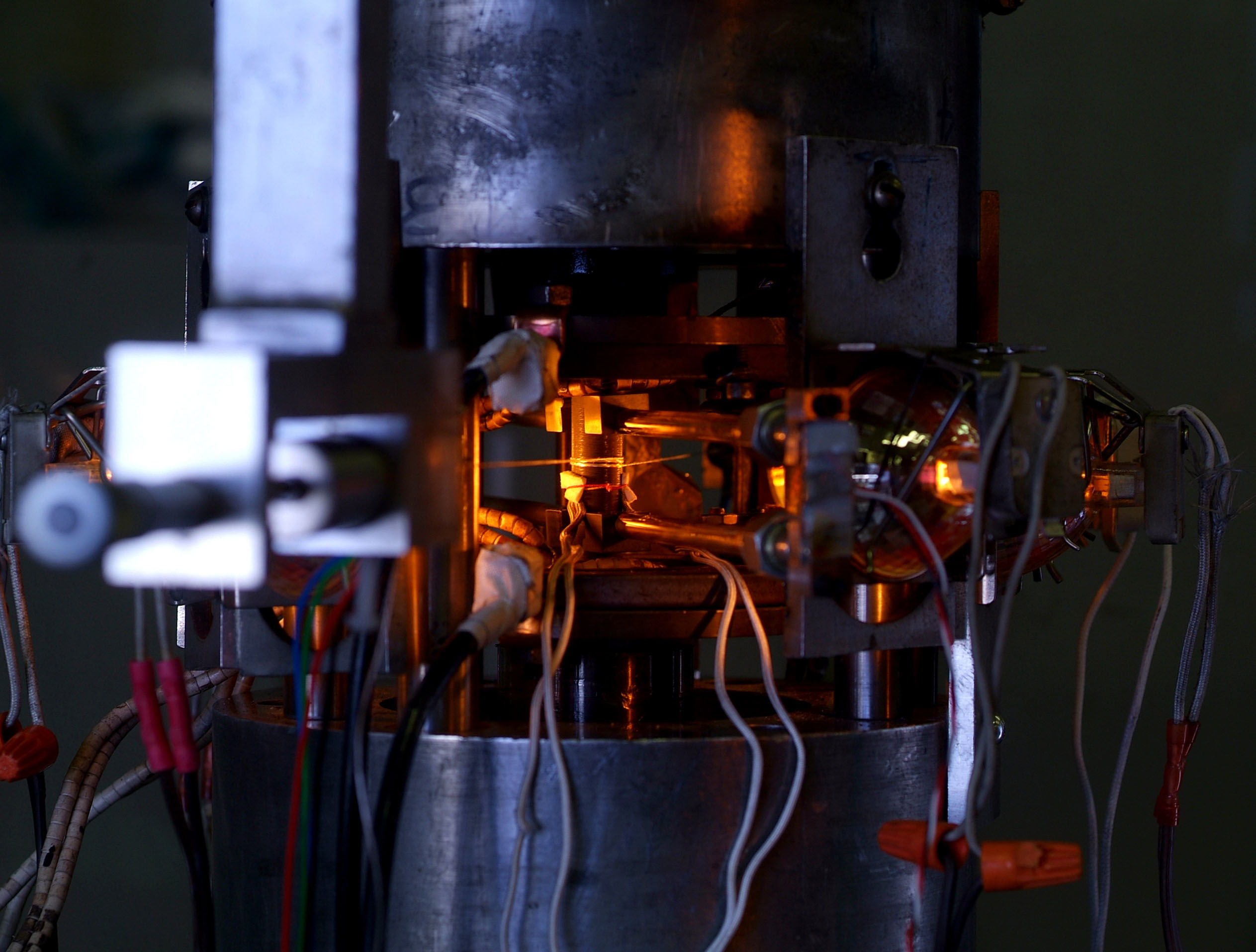
Under this subcontract, Kratos will provide a compact, space-qualified closed Brayton cycle power conversion system. This crucial component serves as the mechanical bridge between SR-1 Freedom’s onboard fission reactor and the spacecraft’s power distribution and electric propulsion subsystems. It converts the thermal energy generated by the reactor into the vital electrical power required to drive SR-1’s propulsion thrusters and sustain all critical spacecraft operations.
Nuclear electric propulsion utilizes a fission-based, nuclear power module to generate electricity, powering highly efficient electric thrusters rather than relying solely on conventional chemical thrusters. By accelerating charged particles to create a gentle but relentless thrust, NEP allows the spacecraft to gradually build immense velocity. Because they can operate continuously for months or years, NEP-equipped spacecraft can reach Mars utilizing significantly less propellant than traditional chemically propelled spacecraft. This unprecedented efficiency drastically reduces fuel requirements, freeing up critical mass for scientific instruments, cargo, and future crew-support equipment.
“Being selected to power SR-1 Freedom is a generational honor for Kratos,” said
NASA has positioned the SR-1 Freedom mission as a cornerstone in a broader space nuclear initiative. The mission aims to launch the first
For more information on Kratos and its advanced space and hypersonic programs, visit www.kratosdefense.com.
About Kratos Defense & Security Solutions
Kratos Defense & Security Solutions, Inc. (NASDAQ: KTOS) is a technology, products, system and software company addressing the defense, national security, and commercial markets. Kratos makes true internally funded research, development, capital and other investments, to rapidly develop, produce and field solutions that address our customers’ mission critical needs and requirements. At Kratos, affordability is a technology, and we seek to utilize proven, leading-edge approaches and technology, not unproven bleeding edge approaches or technology, with Kratos’ approach designed to reduce cost, schedule and risk, enabling us to be first to market with cost effective solutions. We believe that Kratos is known as an innovative disruptive change agent in the industry, a company that is an expert in designing products and systems up front for successful rapid, large quantity, low-cost future manufacturing which is a value-add competitive differentiator for our large traditional prime system integrator partners and also to our government and commercial customers. Kratos intends to pursue program and contract opportunities as the prime or lead contractor when we believe that our probability of win (PWin) is high and any investment required by Kratos is within our capital resource comfort level. We intend to partner and team with a large, traditional system integrator when our assessment of PWin is greater or required investment is beyond Kratos’ comfort level. Kratos’ primary business areas include virtualized ground systems for satellites and space vehicles including software for command & control (C2) and telemetry, tracking and control (TT&C), jet powered unmanned aerial drone systems, hypersonic vehicles and rocket systems, propulsion systems for drones, missiles, loitering munitions, supersonic systems, space craft and launch systems, C5ISR and microwave electronic products for missile, radar, missile defense, space, satellite, counter UAS, directed energy, communication and other systems, and virtual & augmented reality training systems for the warfighter. For more information, visit www.KratosDefense.com and follow Kratos on LinkedIn and X.
Notice Regarding Forward-Looking Statements
Certain statements in this press release may constitute "forward-looking statements" within the meaning of the Private Securities Litigation Reform Act of 1995. These forward-looking statements are made on the basis of the current beliefs, expectations and assumptions of the management of Kratos and are subject to significant risks and uncertainty. Investors are cautioned not to place undue reliance on any such forward-looking statements. All such forward-looking statements speak only as of the date they are made, and Kratos undertakes no obligation to update or revise these statements, whether as a result of new information, future events or otherwise. Although Kratos believes that the expectations reflected in these forward-looking statements are reasonable, these statements involve many risks and uncertainties that may cause actual results to differ materially from what may be expressed or implied in these forward-looking statements. For a further discussion of risks and uncertainties that could cause actual results to differ from those expressed in these forward-looking statements, as well as risks relating to the business of Kratos in general, see the risk disclosures in the Annual Report on Form 10-K of Kratos for the year ended December 28, 2025, and in subsequent reports on Forms 10-Q and 8-K and other filings made with the SEC by Kratos.
Press Contact:
Claire Cantrell
claire.cantrell@kratosdefense.com
Investor Information:
877-934-4687
investor@kratosdefense.com


Space Reactor-1 Freedom